Showing every subjectChange subjects

9702/21/M/J/24 · question 1 of 1 in this topic

Question 1

1(b)2 marks

The drag force F_D acting on an object falling through air is given by F_D = ½ CρAv². Fig. 1.1 shows a sphere falling at terminal velocity in air.

Assume that the upthrust on the sphere is negligible.

On Fig. 1.1, draw and label arrows to show the directions of the two forces acting on the sphere.
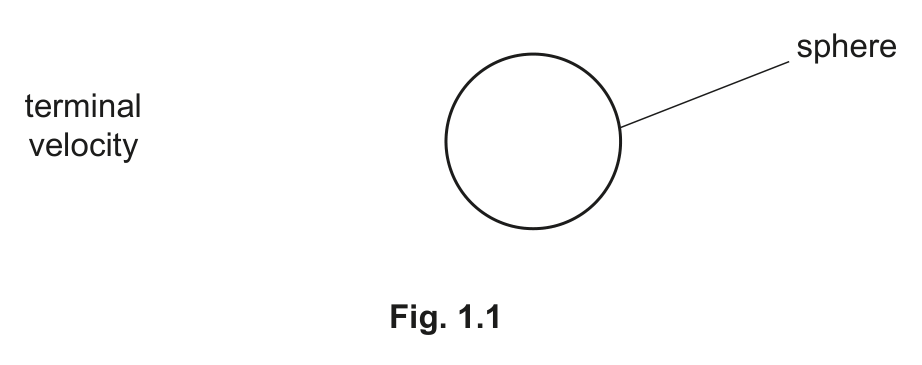
Fig. 1.1 — see the question text for what it shows

Your answer

Suggested time: 3 min

1(c)2 marks

A sphere is falling at terminal velocity in air, and the upthrust on the sphere is negligible. The mass of the sphere is 49 g.

Calculate the drag force F_D acting on the sphere.

Calculate Show your working. The method can earn marks even when the final value is wrong, and a bare answer often cannot.

Your answer

Suggested time: 3 min

1(d)3 marks

The drag force on a falling object is F_D = ½ CρAv², where A is the cross-sectional area, v the velocity, ρ the air density and C the drag coefficient.

The sphere (mass 49 g, falling at terminal velocity so that the drag force equals its weight, found in (c)) is falling in air at a terminal velocity of 25 in SI base units.

The density of the air is 1.2 in SI base units.

The diameter of the sphere is 0.060 in SI base units.

Use your answer in (c) to calculate the drag coefficient C for the sphere.

Using You must use the thing it names. An answer that reaches the right value another way may not score.

Your answer

Suggested time: 5 min

9702/21/M/J/24Cambridge International AS & A Level Physics 9702 · May/June 2024 · Paper 2 variant 1 · sit the whole paper